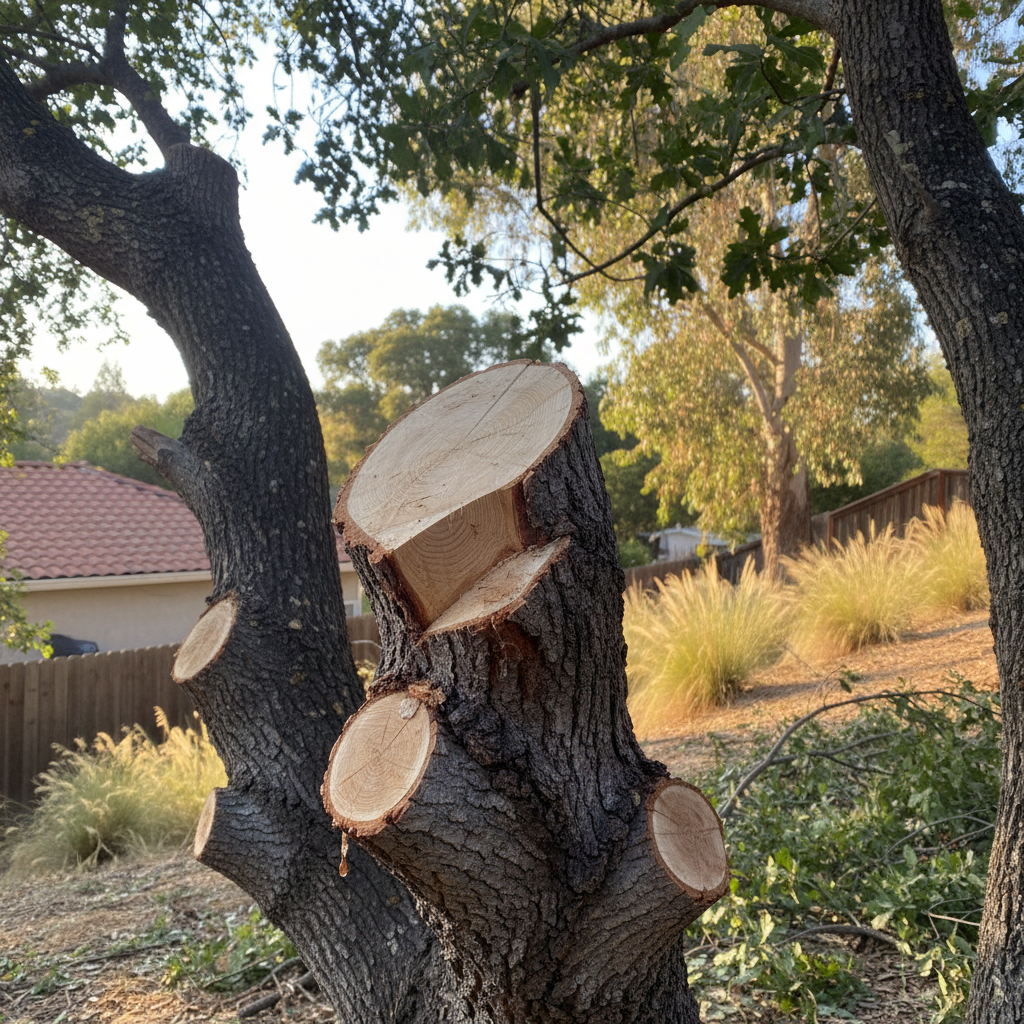
Thinking About Pruning Your Own Trees? Read This First.
Alright, let's talk about pruning. I see a lot of folks here in Fremont, especially around the older neighborhoods like Niles or Centerville, who really want to keep their trees looking good and healthy. That's fantastic! A well-maintained tree definitely adds value and beauty to your property. But there’s a big difference between snipping off a few dead twigs and taking a chainsaw to a major limb. Knowing that difference can save you a lot of headache, and sometimes, a lot of money you might otherwise spend on tree repair or even replacement.
You're probably wondering, "Can I actually do this myself, or do I really need to call Fremont Tree Solutions?" It's a fair question, and honestly, the answer isn't always black and white. It really depends on a few things: the tree's size, the kind of cut you're thinking about, and how comfortable you are with heights and power tools.
Before You Even Think About Cutting
First things first, take a good, long look at your tree. What's its overall health like? Are there any big, dead branches hanging over your house or your neighbor's fence? Is a branch rubbing against your roof? These are all pretty good reasons to prune. But before you make any cuts, you've got to understand a few basics.
- Know Your Tree: Different trees, well, they just respond differently to pruning. An oak, for instance, needs a completely different approach than a fruit tree. If you're not sure what kind of tree you have, snap a picture and look it up online, or just ask a local arborist.
- Timing is Key: For most deciduous trees, late winter or early spring, before the leaves even bud out, is the best time. It's much easier to see the branch structure then, and the tree is dormant, so it's under less stress. For evergreens, it's a bit more flexible, but generally, late winter to early spring works well for them too. Just don't prune during late summer or fall; that can actually encourage new growth that won't harden off before winter hits.
- Tool Up Properly: You wouldn't try to build a deck with a butter knife, right? Same goes for pruning. For small stuff, you'll need sharp hand pruners (bypass style is usually best). For branches up to about 1.5 inches thick, loppers are your best friend. Anything thicker than that, and you're looking at needing a pruning saw. Make sure your tools are clean and sharp, by the way. Dull tools tear the bark and leave jagged wounds, which are basically an open invitation for disease.
What You Can (Probably) Handle Yourself
For the average homeowner, DIY pruning should really stick to small, easily accessible branches. Think about what you can reach safely from the ground or a very stable, short ladder. Here's what's usually okay for you to tackle:
- Dead or Diseased Branches: If a branch is clearly dead (no leaves, brittle, or discolored) and it's small enough for your hand pruners or loppers, go for it. Cut it back to the branch collar – that slightly swollen area where the branch meets the main trunk or a larger branch. That collar is actually where the tree heals itself.
- Small Crossing or Rubbing Branches: Branches that rub against each other can create wounds, and those are entry points for pests and diseases. If they're small and easy to reach, pick the weaker or less ideally placed branch and remove it.
- Suckers and Water Sprouts: These are those fast-growing, vertical shoots that pop up from the base of the tree (suckers) or along the branches (water sprouts). They don't really do much for the tree's health and you can easily remove them with hand pruners.
- Lower Branches for Clearance: If a small, low-hanging branch is blocking a walkway or brushing your head, and you can reach it safely, you can remove it. Just remember the "three-cut method" for anything bigger than your thumb to avoid tearing the bark.
Remember, if you're ever in doubt, just don't make the cut. A bad cut can honestly be worse than no cut at all.
When It's Time to Call a Pro (Like Us!)
This is where Fremont Tree Solutions comes in. There are definitely situations where trying to save a few bucks yourself can lead to serious injury or permanent damage to your tree. Don't risk it when:
- Any Branch Over 2 Inches in Diameter: This is a pretty good rule of thumb. Larger branches are heavy, and if they fall unexpectedly, they can cause serious damage or injury.
- Branches Requiring a Chainsaw: If you need a chainsaw, you probably need a professional. Chainsaws are dangerous tools, and using them from a ladder is incredibly risky.
- Working at Heights: If you need to be on a tall ladder, or worse, climbing into the tree itself, that's a job for trained arborists with the right safety gear and insurance. We've got the equipment and the experience to do it safely, believe me.
- Branches Near Power Lines: This is a non-negotiable "call a pro" situation. Never, ever prune near power lines yourself. It's incredibly dangerous and can be fatal. Call the utility company first, then call us.
- Major Structural Pruning: If your tree needs significant shaping, thinning, or has large dead limbs that are high up, you need an arborist. We understand tree biology and how to make cuts that promote long-term health and structural integrity, not just temporary aesthetics. We also know how to deal with the clay soil we have here in Fremont, which can sometimes impact root development and tree stability.
- You're Not Sure: If you're looking at a branch and thinking, "Hmm, I'm not really sure if I should cut this," that's your cue to call us for an assessment. We'd rather give you some advice than see you or your tree get hurt.
After the Cut
Once you've made your cuts (or we have), there's not much you need to do. Don't use wound paint or tree tar. Research has actually shown it hinders the tree's natural healing process. Just let the tree do its thing. Keep an eye on the cuts over the next few weeks and months to make sure they're healing properly and there are no signs of disease or pests.
Pruning is both an art and a science, and it's essential for the health and safety of your trees. For the small stuff, go for it. For anything bigger, tougher, or higher, give Fremont Tree Solutions a call. We're here to help keep your trees healthy and your property safe.