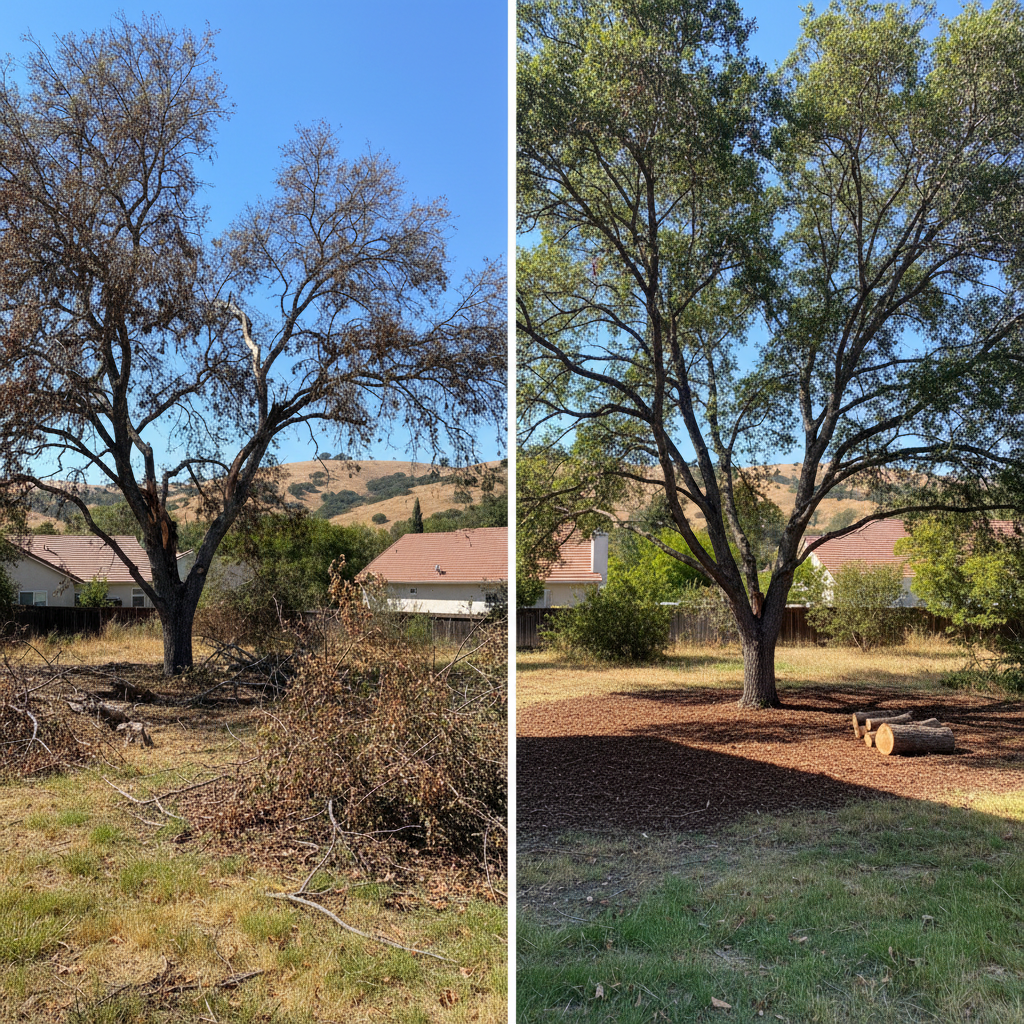
Alright, let's talk about tree pruning. You've got a tree in your yard, maybe it's looking a little wild, or you're worried about its health, or even just how it looks. You start looking into pruning, and suddenly you're seeing terms like 'structural pruning' and 'crown reduction.' What's the difference, and which one should you be thinking about for your Fremont home?
Structural Pruning: Building a Strong Foundation
Think of structural pruning like building a house with a solid frame. The goal here is to encourage a strong, healthy tree that can stand up to our occasional Santa Ana winds and grow beautifully for years. We're looking at the tree's overall architecture, identifying weak branches, competing leaders, or poor branch attachments early on. It's all about creating a central leader (the main trunk, you know) and well-spaced, strong lateral branches.
When we do structural pruning, we're usually removing smaller branches that are crossing, rubbing, or growing inward. We're also trying to establish good spacing between branches so they don't compete for light and nutrients later on. This type of pruning is often done on younger trees, but it's also crucial for mature trees to maintain their integrity. It's a proactive approach, preventing problems before they become big, expensive headaches.
The benefits? You get a tree that's much more resistant to storm damage. It'll have better air circulation through its canopy, which helps prevent disease. Plus, it just looks better – a well-structured tree has a natural, balanced appearance. It's an investment in the long-term health and safety of your tree, really.
Crown Reduction: When Less is More (Carefully)
Now, crown reduction is a different beast entirely. This is when you're actually reducing a tree's overall height or spread. You might be thinking, "Isn't that just topping?" And that's where we need to be really clear: proper crown reduction is NOT topping. Topping means cutting branches back to stubs, which is terrible for the tree and often leads to rapid, weak regrowth that's even more dangerous down the line. We never top trees at Fremont Tree Solutions, and neither should anyone you hire.
Proper crown reduction involves carefully cutting back larger branches to a lateral branch that's at least one-third the diameter of the branch being removed. This preserves the tree's natural shape and its ability to heal. Why would you do this? Maybe a tree is growing too close to your house, or power lines, or it's simply gotten too big for its space. Sometimes, a tree has suffered storm damage, and crown reduction is necessary to remove damaged sections and reshape it.
The goal isn't just to make the tree smaller; it's to make it smaller in a way that promotes health and stability. It's a more intensive procedure than structural pruning and should only be done by experienced professionals who understand tree biology. Done incorrectly, it can severely stress the tree, make it susceptible to disease, and even shorten its lifespan.
Cost, Durability, Maintenance, and Appearance
- Cost: Structural pruning, especially on younger trees, is generally less expensive per visit because we're removing smaller material. Crown reduction, being more complex and involving larger cuts, typically costs more.
- Durability: Structural pruning vastly improves a tree's long-term durability and its resistance to breakage. Crown reduction, if done correctly, can maintain durability, but if done poorly, it severely compromises it.
- Maintenance: A structurally pruned tree requires less frequent, less intensive maintenance over its lifetime. A tree that's undergone crown reduction might need more regular check-ups to manage regrowth, especially if it's an older tree or one that's been stressed.
- Appearance: Structural pruning enhances the tree's natural beauty and form. Crown reduction, even when done well, can sometimes alter the tree's natural silhouette, though a skilled arborist will strive to maintain an aesthetically pleasing shape.
My Recommendation for Fremont Homeowners
For most homeowners in Fremont, especially if you have younger trees or want to prevent future problems, structural pruning is almost always the better choice. It's proactive, promotes long-term health, and saves you money and headaches down the road. We see so many trees in areas like the Mission San Jose district that could have avoided significant issues if they'd had proper structural pruning when they were younger.
Crown reduction has its place, but it should be a last resort or used for very specific situations, like mitigating risk from an overgrown tree near structures. If you're considering crown reduction, make absolutely sure you're hiring a certified arborist who understands how to do it properly, without topping your tree. It's a complex procedure, and getting it wrong can cost you the tree.
Ultimately, the best approach depends on your specific tree, its age, its condition, and what you're trying to achieve. Don't guess. Give us a call at Fremont Tree Solutions. We can come out, take a look at your trees, and give you an honest assessment of what they need to thrive.